
When I was diagnosed with breast cancer at 30, “shocked” doesn’t even begin to cover it.
I had no family history. No BRCA mutation. No known genetic predisposition. I’d never had any serious health issues before. I was in a steady relationship, generally pretty type-B about my health, and — if I’m being honest — I’d let routine care fall by the wayside. I hadn’t seen a gynecologist in years.
As it turns out, that lapse was a huge mistake — one that could have cost me my life.
My diagnosis came during a routine physical after I casually mentioned to my doctor that it had been a long time since my last gyno visit. She offered to do a quick breast exam. Spoiler alert: she found something.
Fast forward five months post-treatment. I’m still processing what happened, but one thing is clear: the experience fundamentally changed how I think about my health. For the first time in my life, I developed real health anxiety — not in a spiraling way, but in a what else might be going on in my body that I don’t know about? way.
I wanted information. Real information.
The Rise of Preventative Health — and Why I Was Intrigued
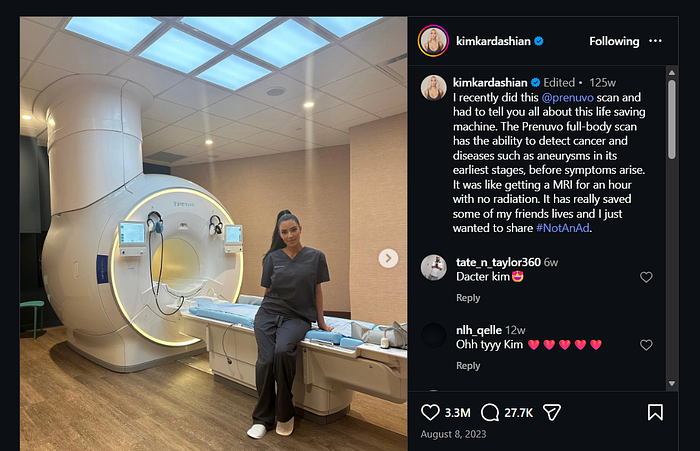
If you follow celebrities like Kim Kardashian — who once promoted a $2,500 full-body scan designed to detect disease early — you’ve probably noticed a growing cultural shift toward preventative, data-driven health. Early detection is suddenly very on trend.
So, when I came across Superpower’s baseline diagnostic panel, which tests 100+ biomarkers including vitamin levels, cholesterol markers like ApoB, cortisol, inflammation indicators, and more, I was immediately intrigued.
For context: biomarkers are measurable substances in your blood that provide insight into how your body is functioning. Think of it as an extremely detailed blood test — one that goes far beyond what you’d typically get at an annual physical. Instead of vague “everything looks fine” feedback, biomarker testing gives you precise, objective data that can support a more personalized and proactive approach to health.
When I saw how extensive Superpower’s panel was — especially at $199, which is dramatically less than many comparable services — I decided to try it.
Here’s my honest experience.
How It Works
The process was refreshingly straightforward. After signing up for Superpower’s premium health membership at superpower.com, I completed a brief intake questionnaire (about 10 minutes) that covered my health history, family background, and what I hoped to learn from the testing.
From there, you can opt to either:
- Schedule a concierge nurse to come to your home (for an additional fee), or
- Book a blood draw at a nearby lab
I opted for a Quest Diagnostics location five minutes from my office. There were plenty of appointment slots, and I was in and out in under five minutes during my lunch break.
Within two to three days, my results were ready.
The Results (and What Made Them Different)
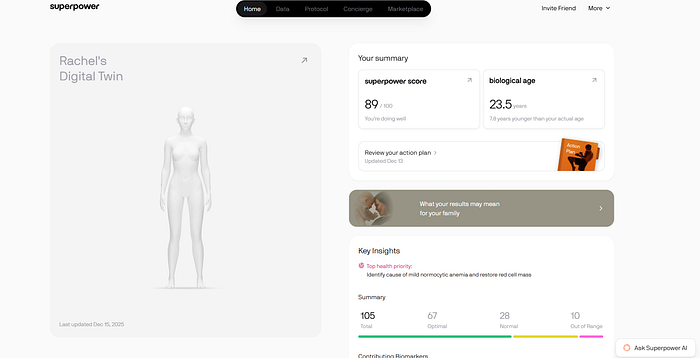
The panel provided clear numerical values for each biomarker, alongside easy-to-understand reference ranges showing what’s low, normal, or elevated. I could download the results instantly and forward them directly to my doctor, which I did for a few markers that fell outside the optimal range.
What stood out most, though, was what happened after the data came in.
Once logged into the platform, I received:
- Plain-language explanations of each result
- A breakdown of which biomarkers were most important to address
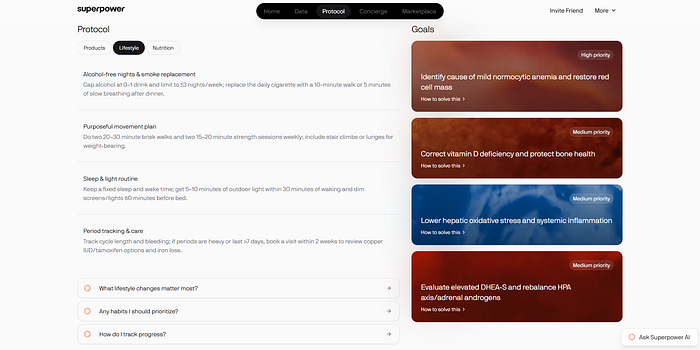
- A personalized action plan with practical next steps
- Even an estimate of my biological age (which, thankfully, came in seven years younger than my actual age)
Instead of being handed a stack of numbers and left to Google them, I felt guided. The platform explained why certain markers mattered, what might be contributing to them, and how to improve them in realistic, sustainable ways.
What I Learned About My Own Health
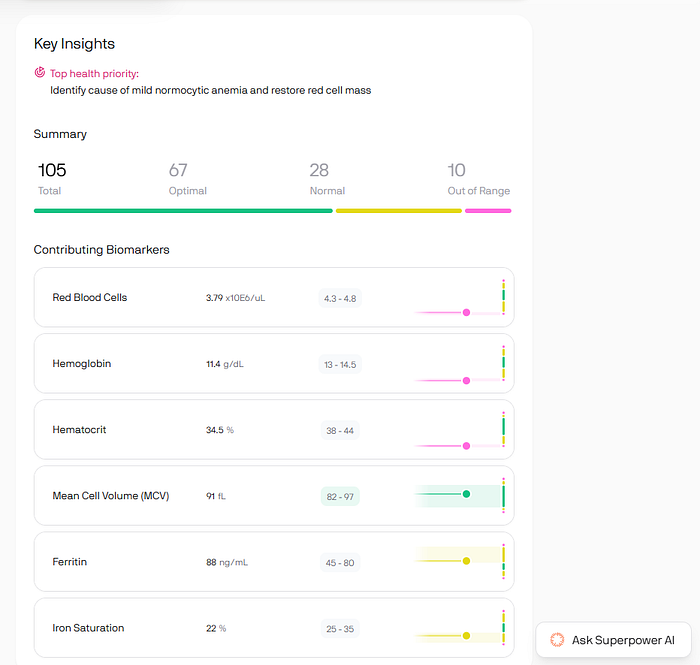
One of the most valuable insights was discovering that I have low vitamin B12 levels and a low red blood cell count, consistent with anemia. Interestingly, my iron levels were normal — meaning it wasn’t iron-deficiency anemia, something I likely wouldn’t have known without this level of testing.
That information helped connect the dots. Instead of chalking my constant fatigue up to work stress or post-treatment exhaustion, I finally had a clearer picture of what was actually happening in my body — and a roadmap for addressing it.
What I Liked Most
- Far more comprehensive than standard blood work. Most primary care panels test 10–20 markers. This tests over 100.
- Ideal for prevention and trend tracking. You can monitor how lifestyle changes affect your health over time and potentially catch issues early with an (relatively) inexpensive annual membership.
- Transparency and data ownership. You see your raw numbers, not just a doctor’s summary. I found that incredibly empowering.
- Actionable guidance, not just data. The personalized insights made the results feel usable rather than overwhelming.
Above all, Superpower gave me something I didn’t realize I was craving after cancer: peace of mind. Knowing I’m taking proactive, informed steps when it comes to my health feels grounding in a way that’s hard to put into words.
After everything I’ve been through, that sense of agency is invaluable.

 Wine and Zoloft
Leave a reply to Lisa May Melfi Cancel reply